Manly is one of the few places in Sydney where you can stand on a suburban footpath, walk for fifteen minutes, and be somewhere genuinely wild. The peninsula holds an endangered penguin colony, an endangered bandicoot population, a no-take marine reserve with more than 150 fish species in it, and a heathland carrying over ninety kinds of bird.
Most visitors see almost none of it, because nobody tells them where to look — or, in one case, that looking is the wrong idea entirely.
This is the honest version. Some of it you can see this afternoon for free. Some of it you cannot see at all, and the reason why is the most interesting story on the headland.
The penguins almost nobody sees
Start with the rarest thing here, because it sets the tone for everything else.
Manly holds the only breeding colony of little penguins left on the New South Wales mainland. Everywhere else along this coastline, the mainland colonies are gone. The birds that remain nest in a sheltered pocket of North Harbour, and they have been hanging on there through fox predation, dogs, boat strike and marine heatwaves.
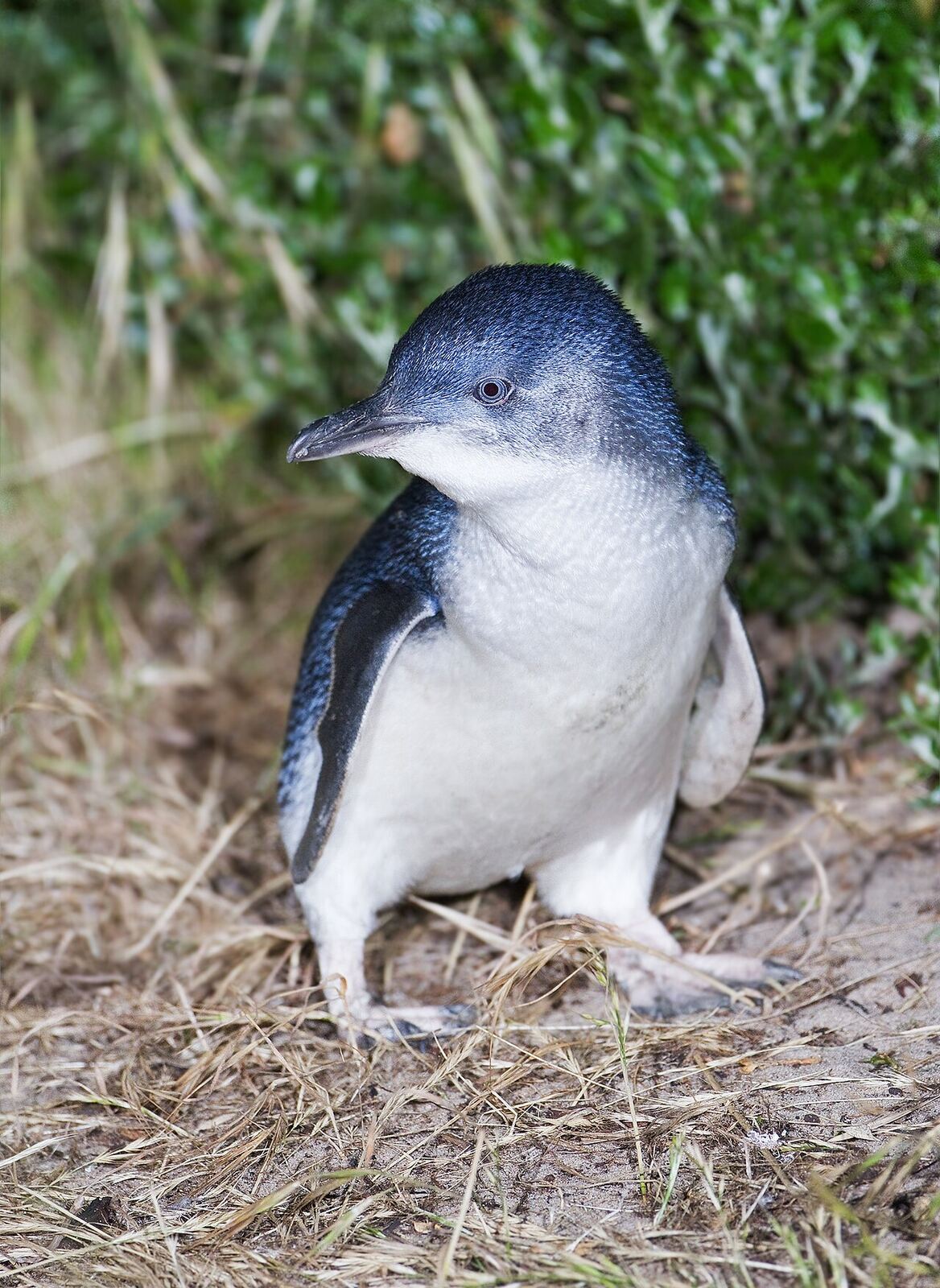
Here are the numbers, and they are not comfortable reading. The colony was listed as an endangered population in 2002, and its habitat was declared Critical Habitat — a rare, serious designation. In the 2022–23 season it produced 29 breeding pairs and 56 fledglings. By 2023–24 that was 19 pairs. In 2024–25 it was 15 pairs and 29 fledglings, and the 2025–26 season came in at 15 pairs and 30 fledglings.
So: roughly half the breeding pairs of four years ago, now stable at a very low number. Fifteen pairs is not a population with much margin in it.
They are here from May to February. That is a long season — they come ashore to breed, raise chicks through the spring and summer, and the colony empties out around February. Which means that for most of the year, there genuinely are penguins a couple of kilometres from the Corso.
And you still won't see one. That is not bad luck or bad timing. They come ashore after dark, they nest in burrows and under rock ledges on a stretch of coast you cannot walk to, and the whole point of how the site is managed is to keep people away from them at the hours they are exposed.
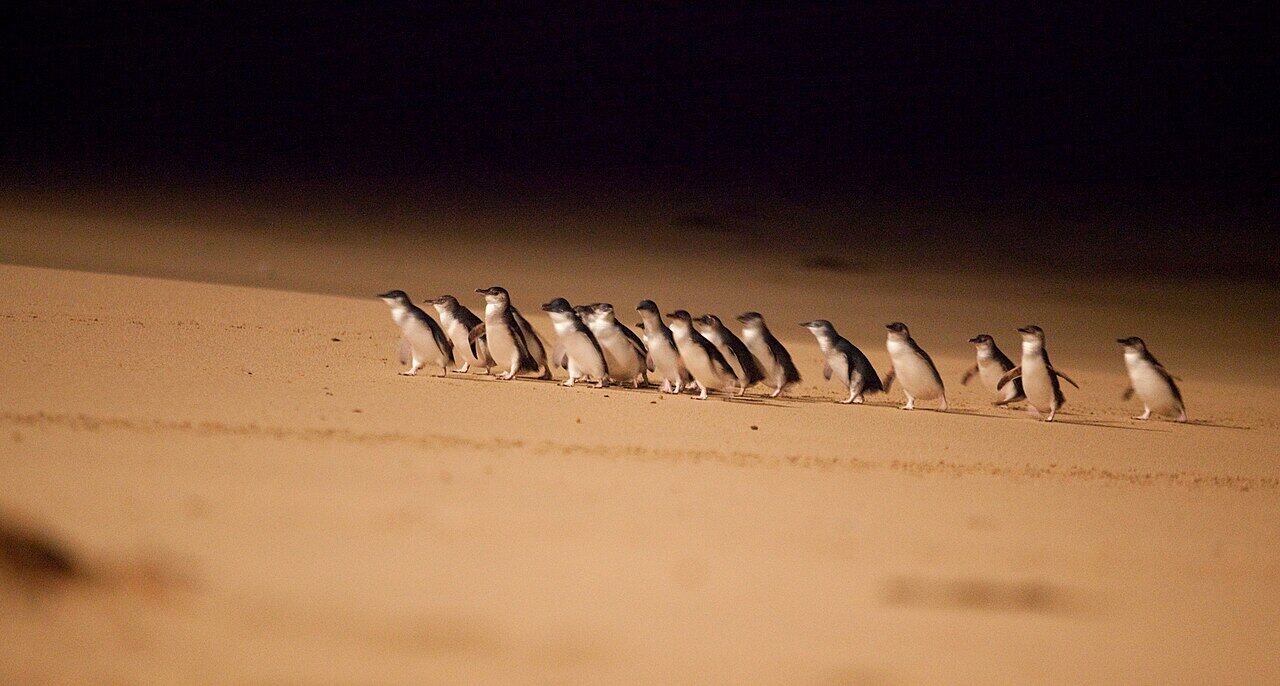
If you want the ordinary version of this experience, it exists — in Victoria, on Phillip Island, with a grandstand and a ticket. Manly is the opposite arrangement: a small, fragile colony that survives partly because it is inconvenient to visit.
Where the penguins are, and the rules that protect them
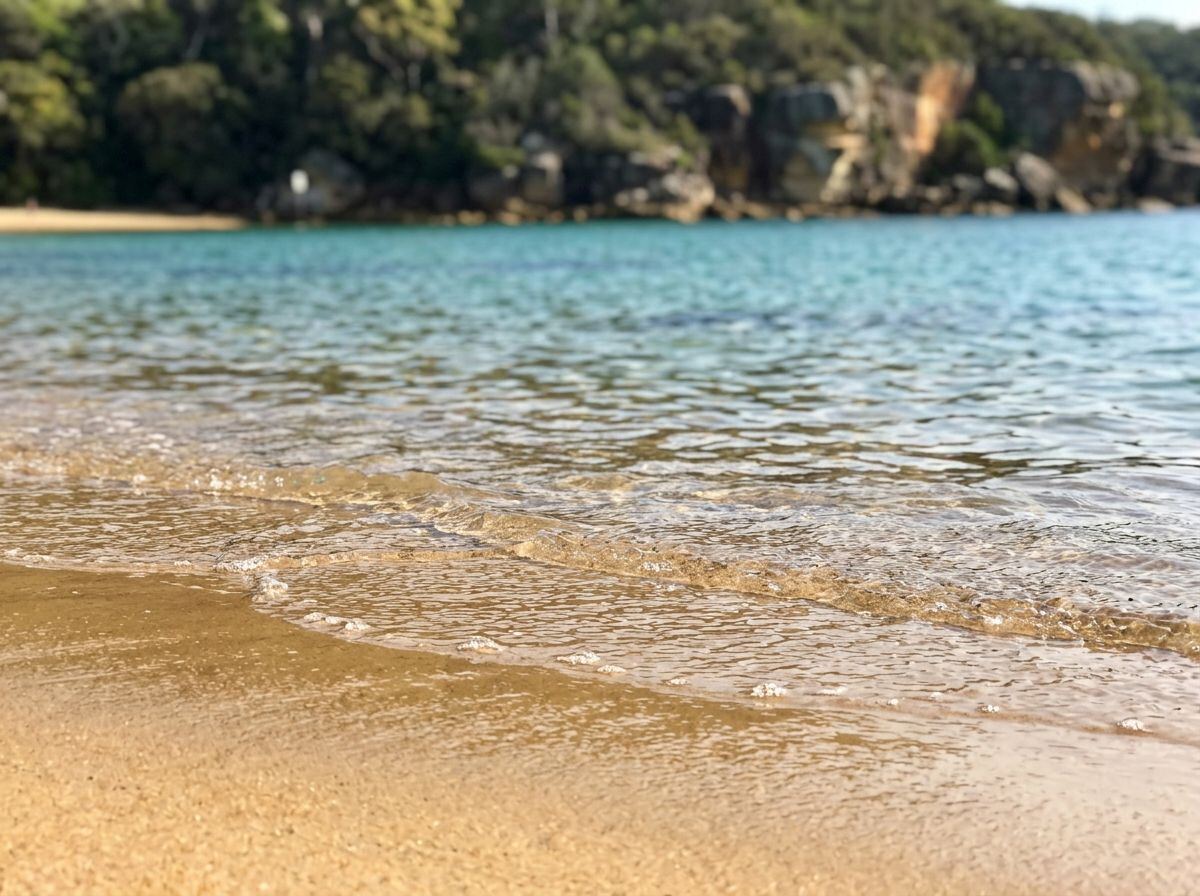
The colony's stronghold is around Spring Cove, on the North Harbour side of the North Head peninsula, taking in Store Beach and the sheltered coves near the old quarantine ground. The formal protected area is the Area of Outstanding Biodiversity Value: Spring Cove and Manly.
What that means in practice, if you are on or near the water:
- Store Beach is water access only — about 2 km and 20 to 30 minutes by kayak from Manly Wharf, or by boat. There are no facilities of any kind.
- It closes at dusk. The penguins come ashore in the dark and that beach is their front door. Being on it at night is the single most damaging thing a visitor can do here.
- No dogs. At all. This is not a leash rule, it is an exclusion — dogs are banned from Sydney Harbour National Park outright, and fines run to thousands of dollars. Dogs have historically been one of the colony's worst threats.
- On the water there is a 4-knot speed limit around Spring Cove, and yellow marker buoys showing a no-anchoring zone. Anchor only in water deeper than 8 metres, and stay off the seagrass.
- If you ever do see one: do not approach it, and do not use a flash. Flash disorientates them, and a disorientated penguin on open sand is an easy meal.
Collins Flat Beach, on the same stretch, is the one you can actually reach — you can drive to it and walk down in a couple of minutes. It is a lovely, quiet little harbour beach and worth the detour. Treat it with the same care: you are inside the penguins' coastline, and the fact that it is easy to get to is exactly why it needs the manners.
There is one legitimate way to get properly involved. NSW National Parks runs a volunteer penguin warden programme — wardens patrol the colony nightly through the breeding season, and they train new people through the Sydney North area office. If you live here, that is a far better use of an evening than trying to spot one.
North Head is a serious birding site
Here is the part of this post that most guides to Manly leave out entirely: the headland carries more than ninety species of bird, and some counts put it above a hundred.
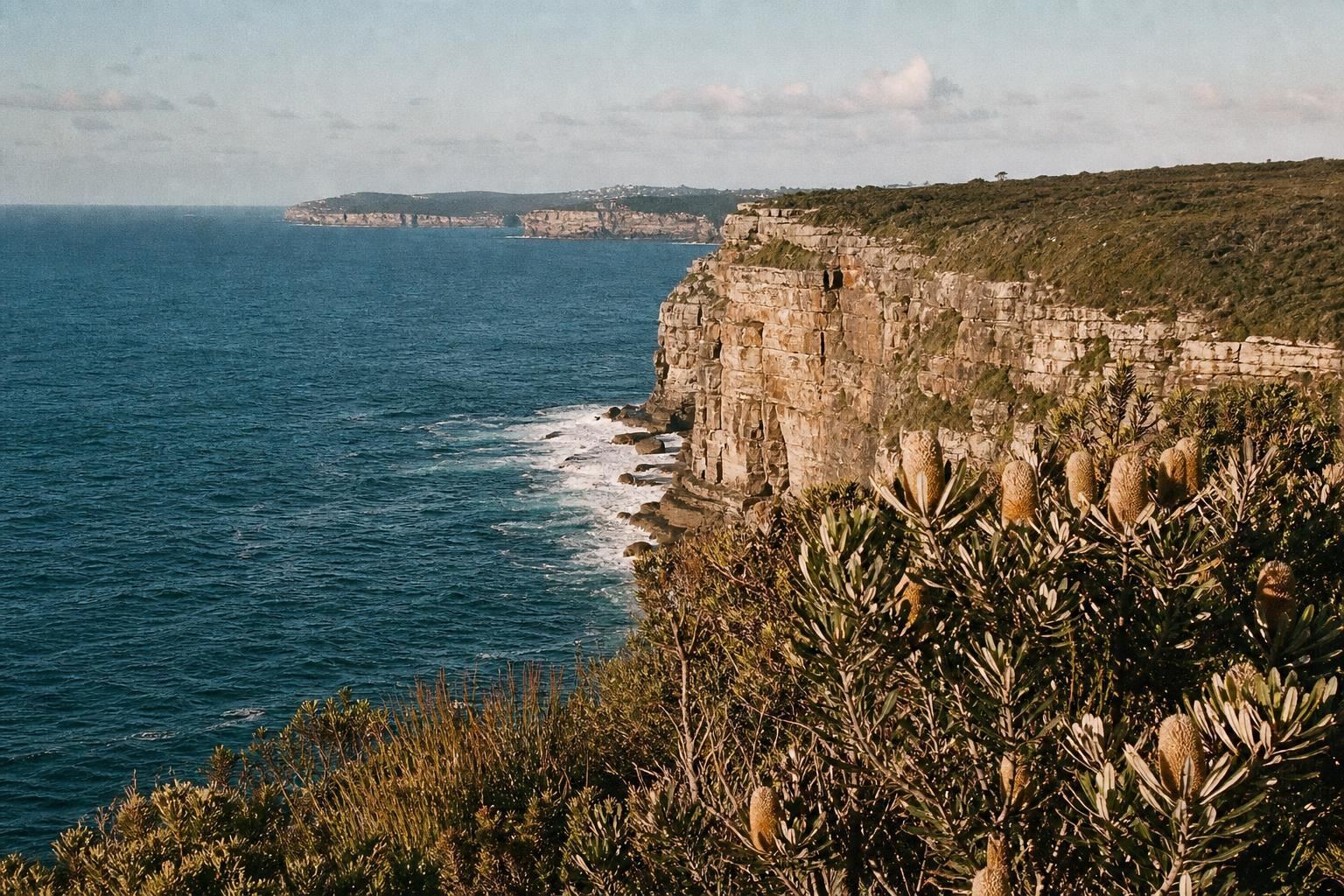
The reason is the vegetation. North Head holds Sydney's largest remaining area of Eastern Suburbs Banksia Scrub, an endangered ecological community growing on ancient wind-blown sand dunes — the last such dunes in Sydney Harbour. It has been cleared almost everywhere else it once grew. What survives here is low, dense, flowering coastal heath, and that structure supports a bird list wildly out of proportion to the size of the place.
What to look for, and how:
- Honeyeaters are the signature. The New Holland honeyeater — small, sharply black-and-white, with a white eye and a yellow wing flash — works the banksia and grevillea flowers, and it is busy, loud and easy to notice once you know it. Little wattlebirds are the bigger, greyer, streaky ones making the harsh coughing calls.
- Go early. Bird activity collapses once the north-easterly gets up in the middle of the day, which on this headland is most of the year.
- Walk slowly along the heath edges, not through the middle. The tracks that run out towards Fairfax Lookout put you alongside flowering heath the whole way.
- Spring is peak — the heath flowers from roughly August through October and the honeyeaters follow it.
- If you want a current species list before you come, North Head is a well-watched eBird hotspot ("Sydney Harbour National Park — North Head, Manly"), and the recent sightings there are more reliable than any list a guide like this one can freeze in place.
You are also on a clifftop with open ocean on one side and the harbour mouth on the other, which means seabirds moving past below eye level — and, in season, whales doing the same. The North Head historical walk covers the same tracks from the gun emplacements and quarantine angle, and the Q Station sits in the middle of it.
The birds you'll meet without trying
You do not need to go to North Head for most of Manly's birdlife. It comes to you, loudly, and for a lot of visitors it is the first genuinely foreign thing about being in Australia.
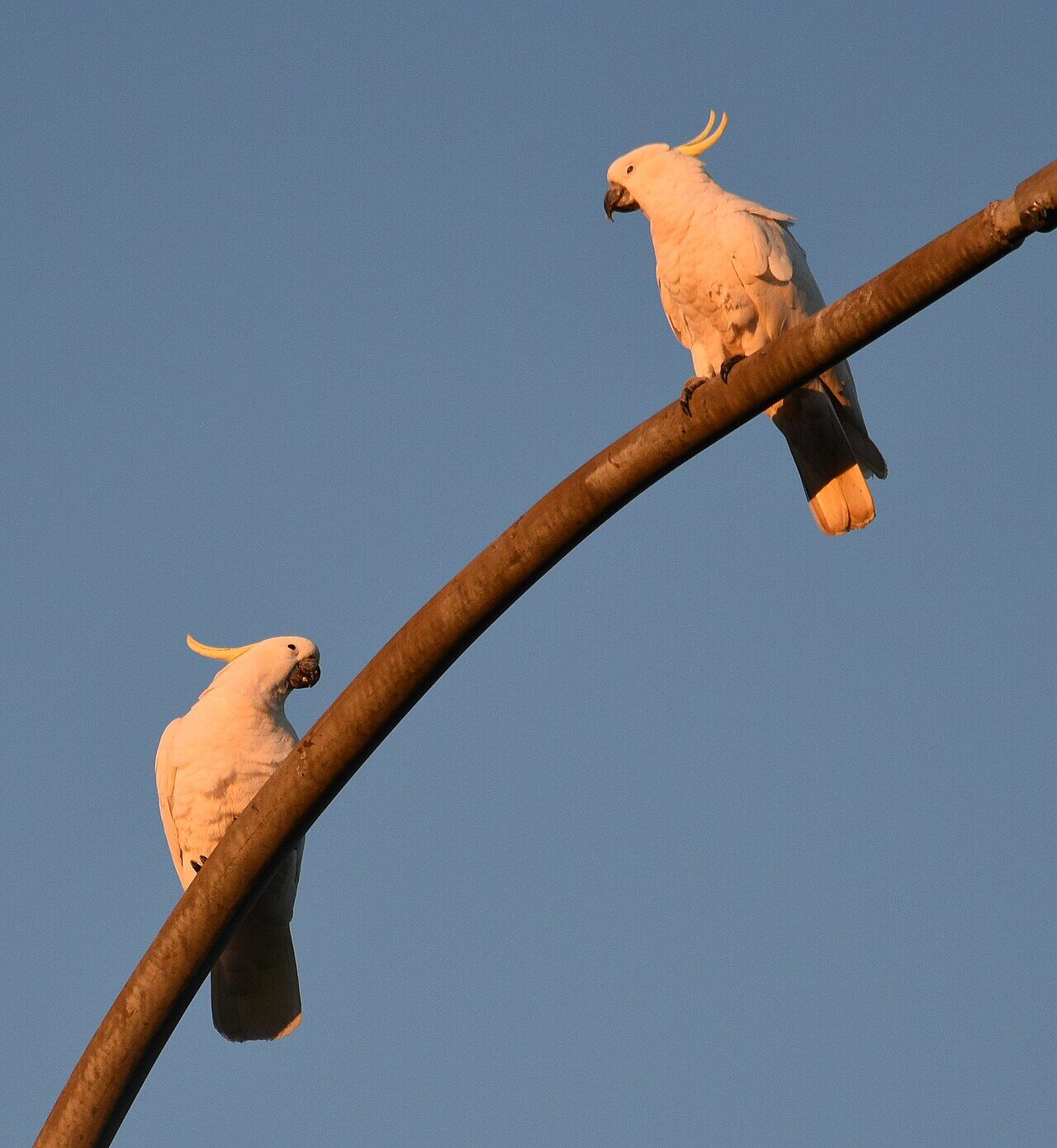
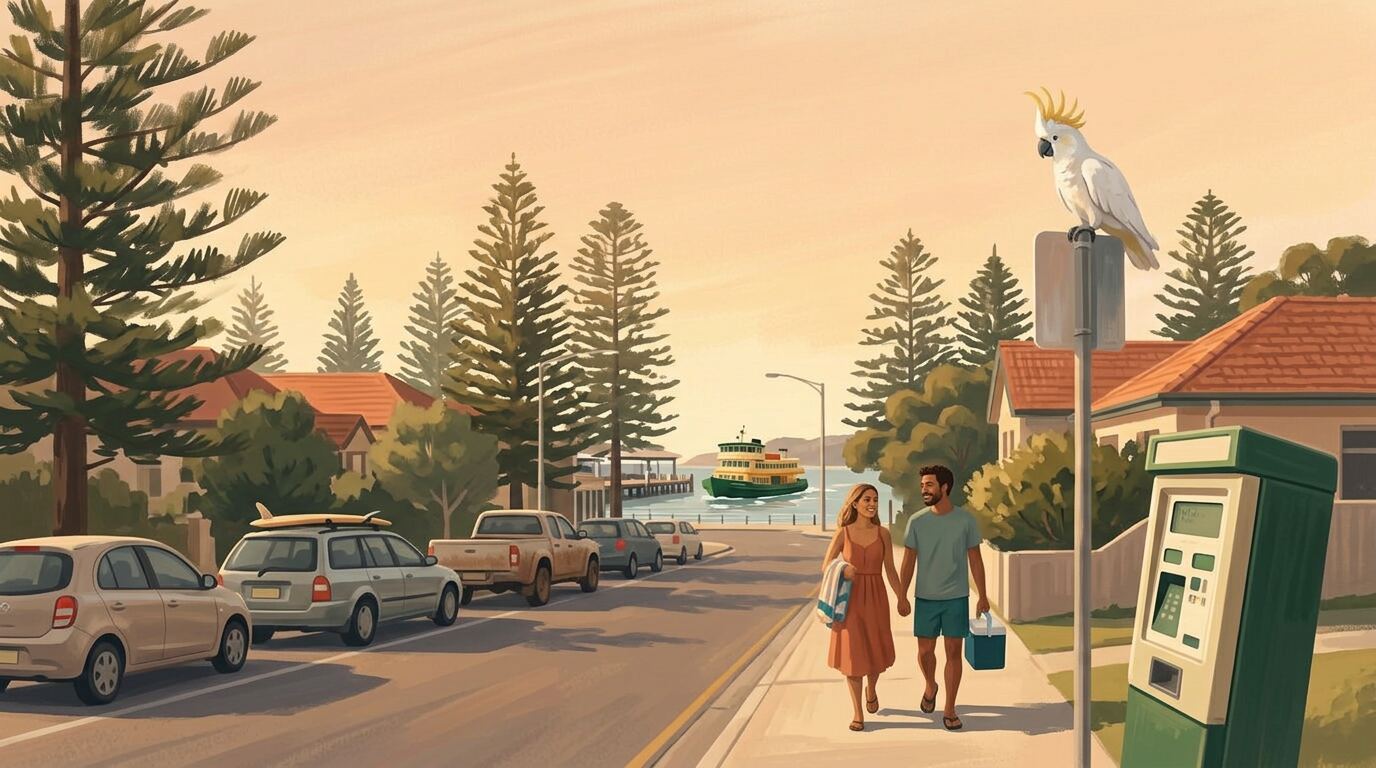
Sulphur-crested cockatoos are the big white ones with the yellow crest, and they are far more intelligent and considerably more destructive than they look. They travel in screeching flocks, they can work out wheelie-bin lids, and they will strip timber balcony railings for entertainment. Manly has plenty.
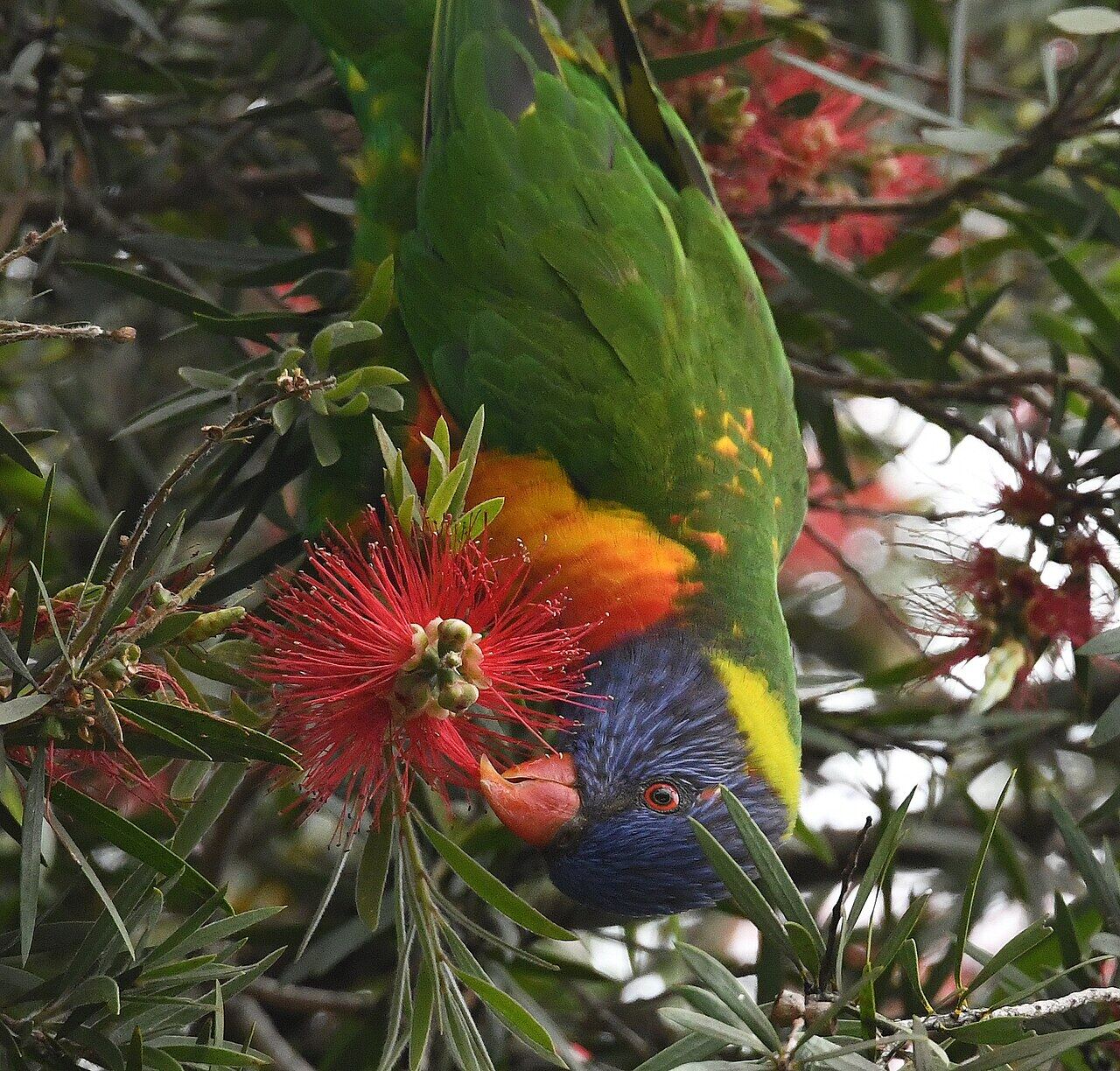
Rainbow lorikeets are the small ones that look like a paint accident — blue head, orange chest, green back. You will hear them before you see them, usually as a fast, shrieking squadron going over at roof height. Watch the flowering bottlebrush and the Norfolk Island pines along the beachfront.
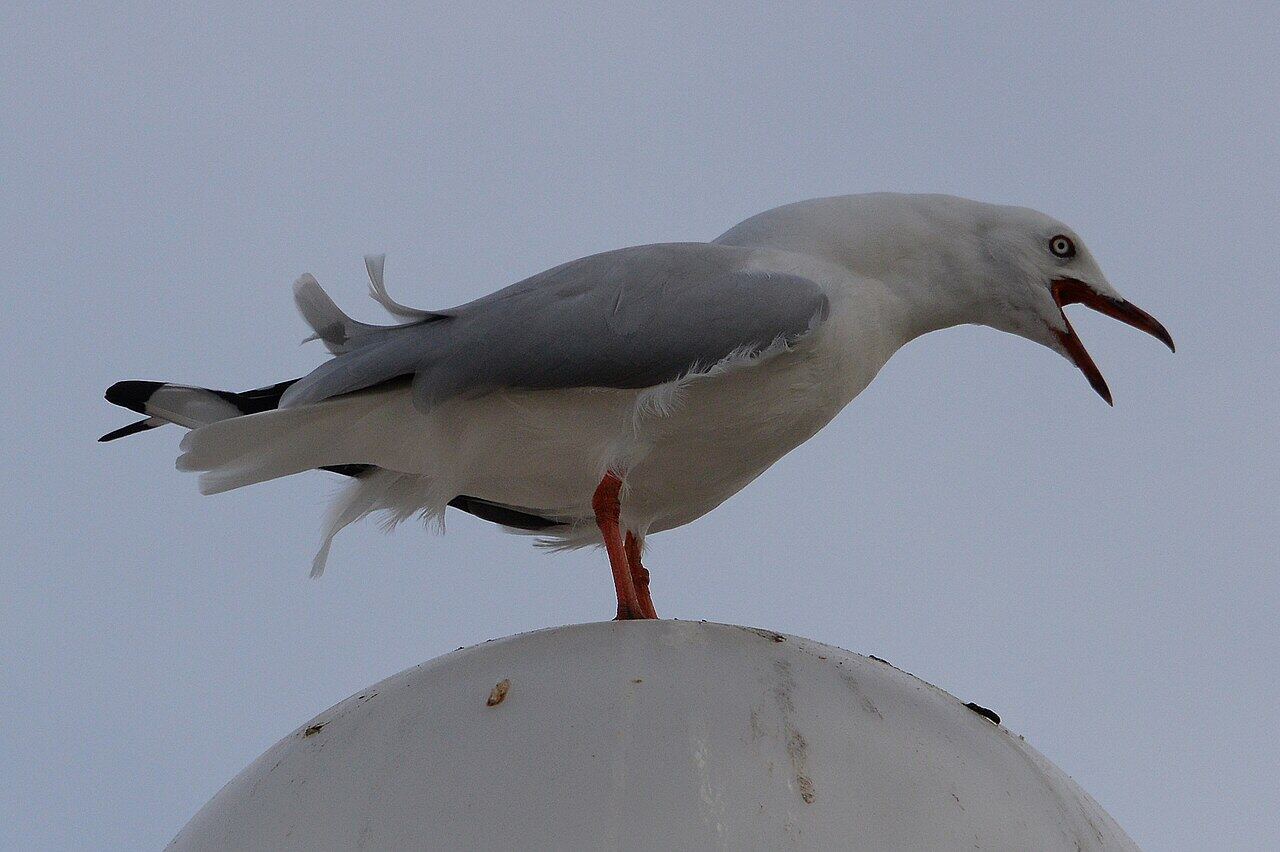
Silver gulls are the ones that will take your chips. Australia's gull is smaller and neater than the northern-hemisphere versions — white, pale grey wings, bright red beak and legs — and completely without shame. Eating fish and chips on the Corso or at the wharf without a defensive strategy is a beginner's mistake. (Where to buy the chips in the first place: the fish and chips guide.)
Which brings up the rule that covers all of them: don't feed them. Bread is bad for birds, hand-feeding makes them aggressive with the next person along, and a chip-fed gull colony is a worse thing for the town than a hungry one. This is the single most useful thing a visitor can do for Manly's wildlife, and it costs nothing.
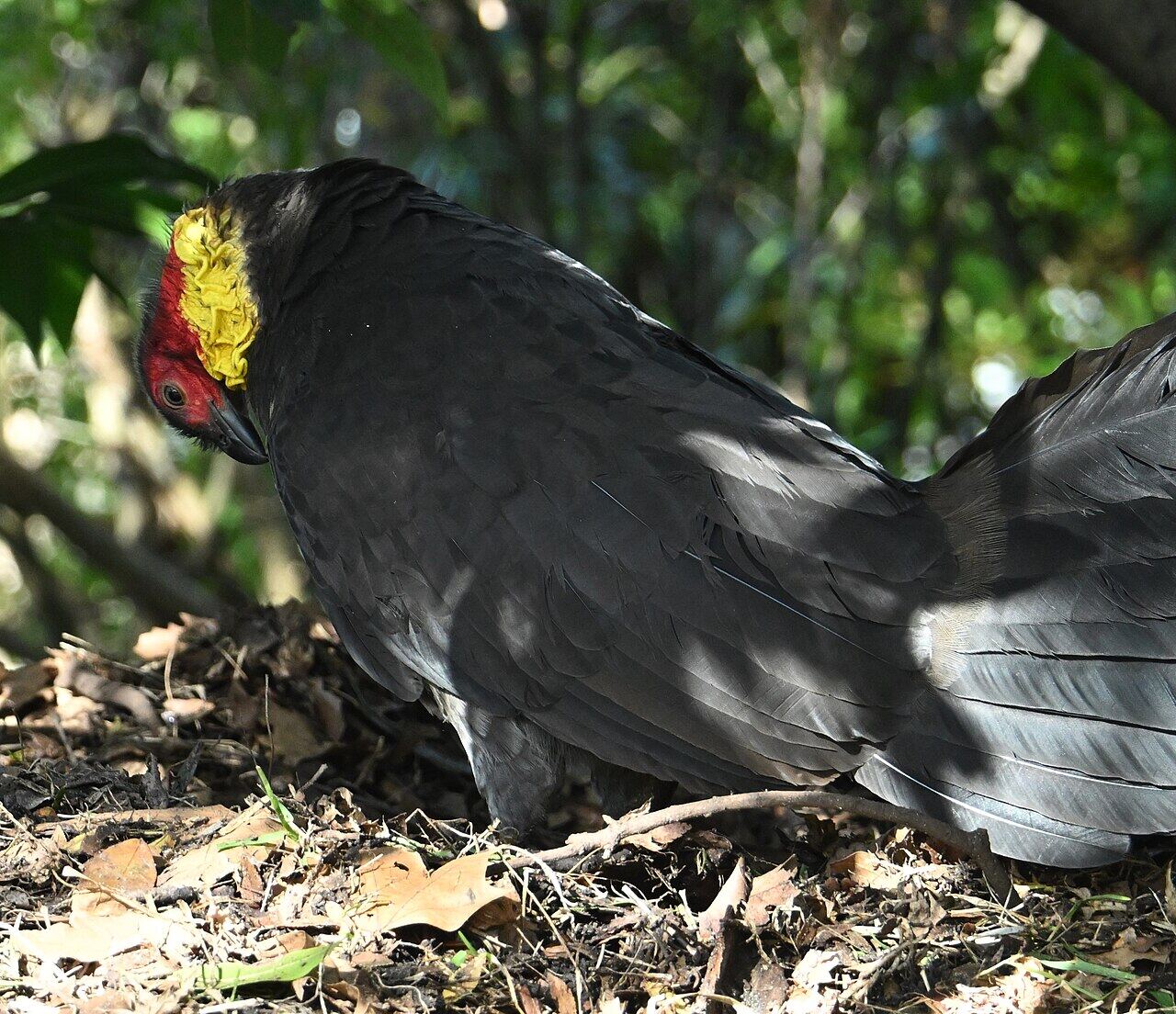
Australian brush turkeys are the black ground birds with a red head and a yellow neck wattle, and they have quietly recolonised Sydney over the last few decades. The males build enormous mounds of rotting leaf litter to incubate eggs — if you find a metre-high pile of raked debris in the bush margins, that is a nest, not rubbish.
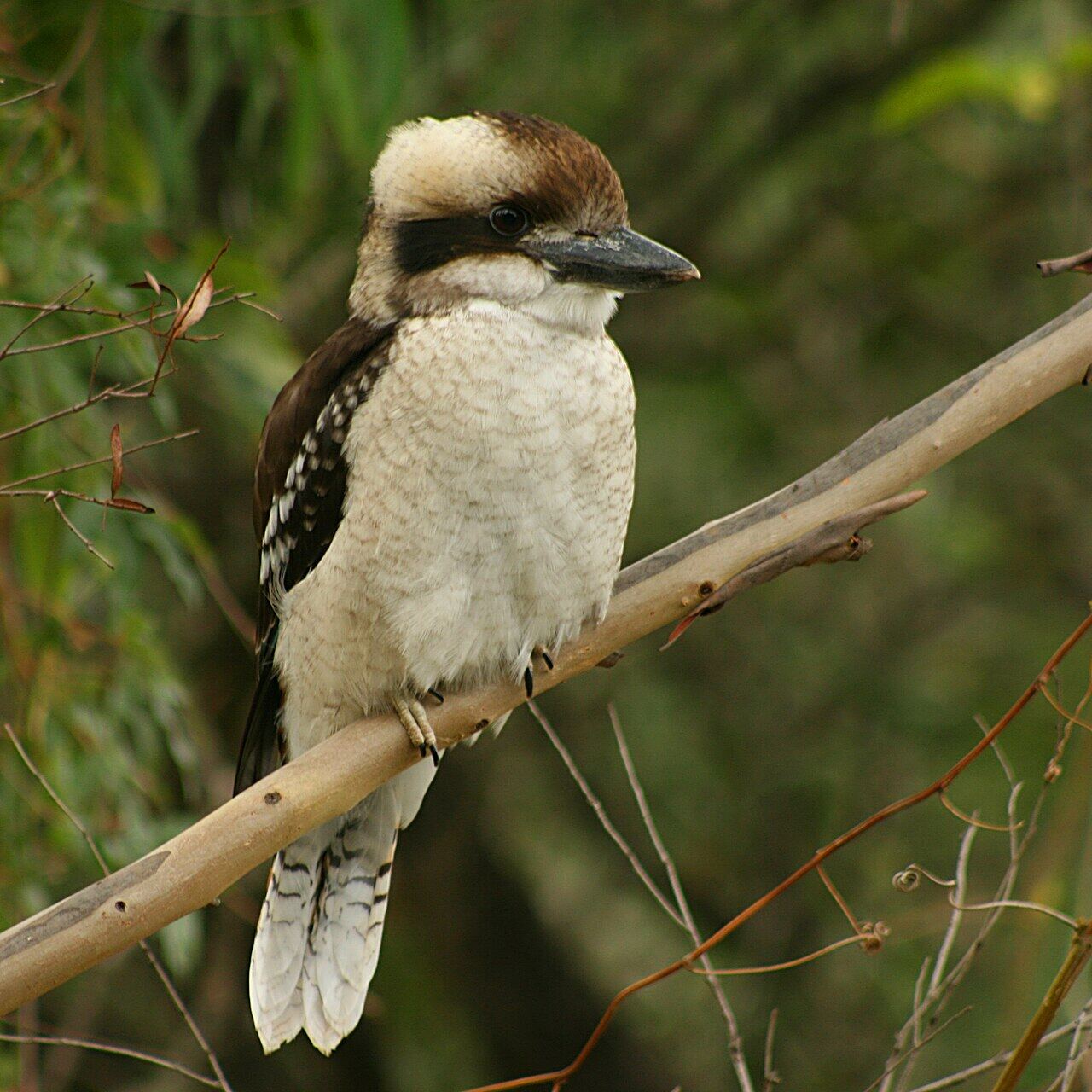
Laughing kookaburras are the ones responsible for the noise everyone recognises from films. They are large kingfishers, they perch very still on branches and powerlines, and they are most vocal at dawn and dusk. If you hear what sounds like a crowd laughing at you at 5am, that is the local pair defending its territory.
One more, and it is seasonal: magpies swoop from roughly August to November, peaking in September. Manly is no exception, and the bushland tracks and North Head are where it happens. It is a genuine consideration for spring visitors and we cover it properly in the spring guide.
Under the water at Cabbage Tree Bay
The best wildlife in Manly is not on land, and it is startlingly easy to get to.
Cabbage Tree Bay — the water between the southern end of Manly Beach and the far side of Shelly Beach — was declared a no-take Aquatic Reserve on 31 March 2002. About 20 hectares. Nothing may be taken from it by any method. Twenty-plus years of that protection has produced something genuinely unusual: a dense, tame, visible marine ecosystem twenty metres off a suburban beach.
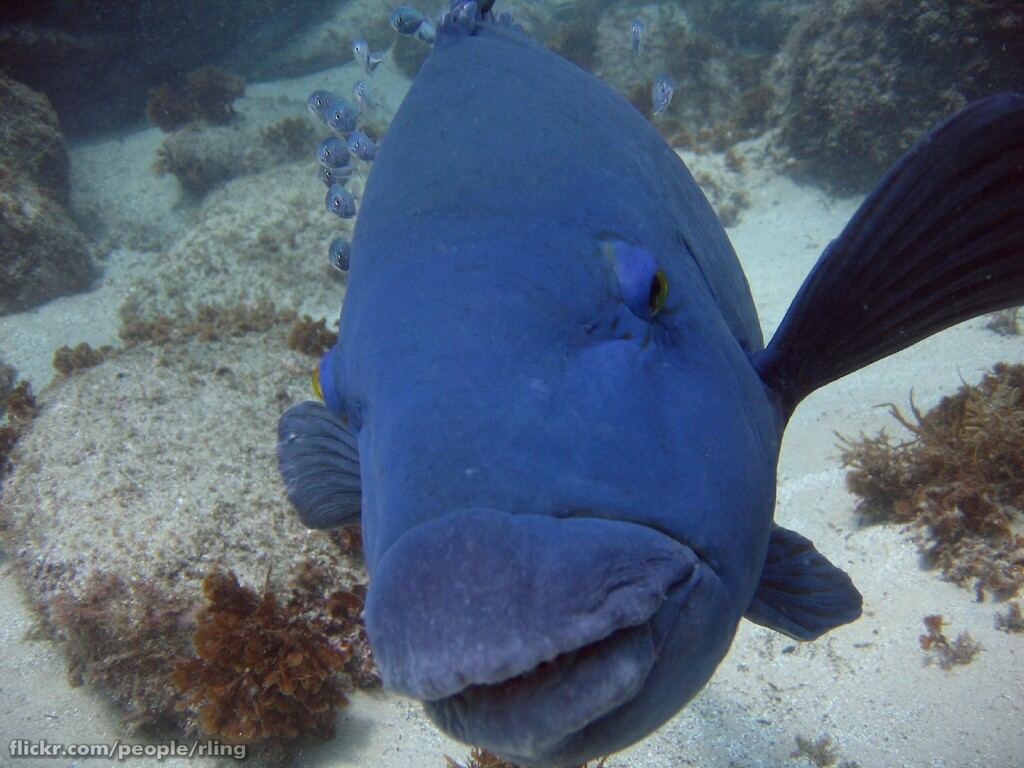
More than 150 species of fish live in the reserve, including giant cuttlefish, wobbegong sharks, rays, octopus and a resident green turtle.
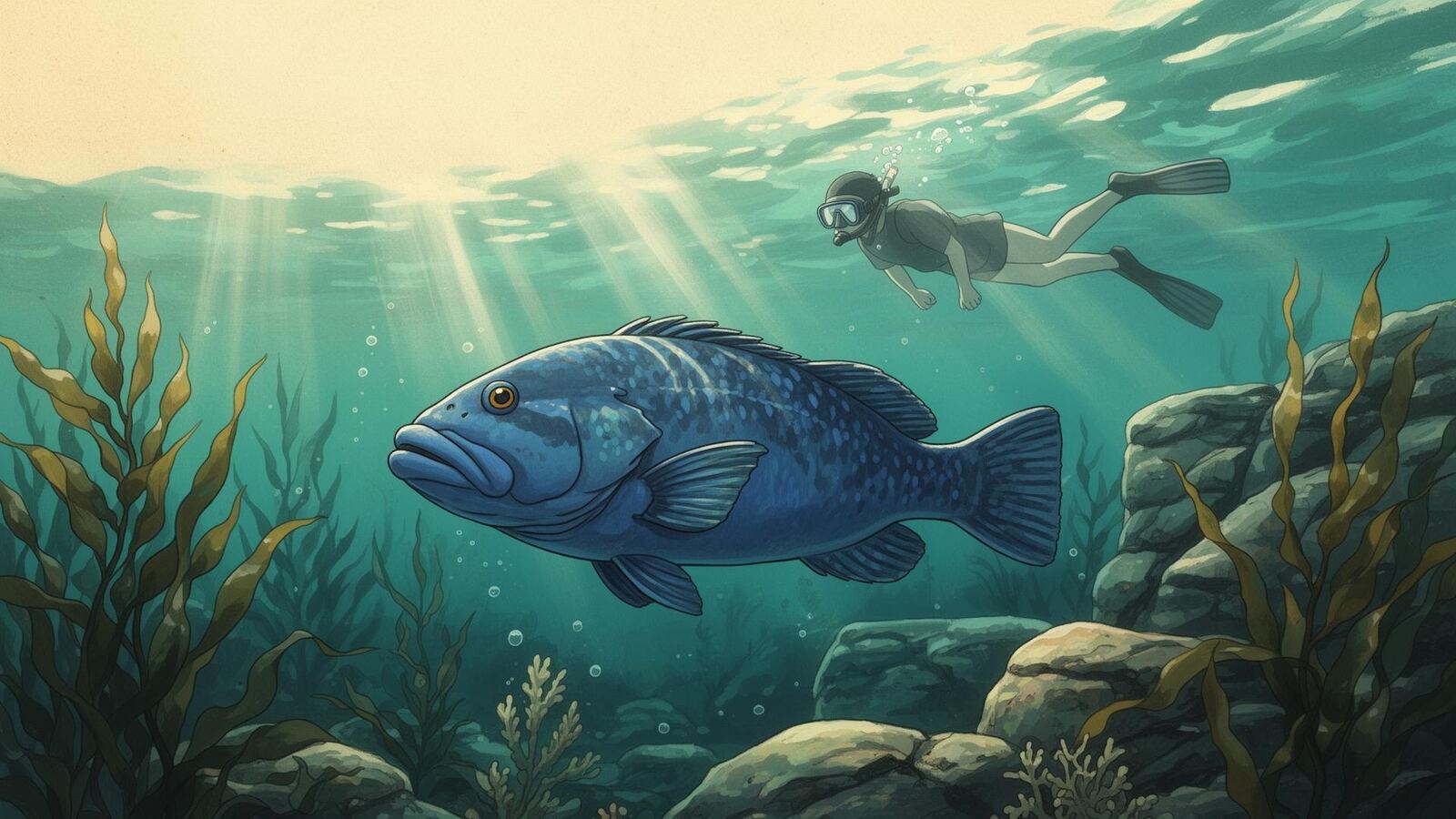
The star is the eastern blue groper, and it has a good story. It has been the state fish of New South Wales since 1998, and since 1 March 2024 all line fishing for it has been banned statewide, extending an earlier trial — so it is protected from every method, everywhere in NSW, not just in the reserve. They are also curious to the point of nosiness, and a big male will swim straight up to a snorkeller and look at them.
Here is the fact that catches everyone out: the blue ones are all male, and none of them started that way. Eastern blue gropers begin life as females, brown or orange-red, and the largest fish in a group changes sex and turns blue. So a big blue groper is an old fish with a history, and the orange ones around it are not a different species.
Full detail on where to enter, when the visibility is good and where to hire gear is in the Cabbage Tree Bay snorkelling guide. If you only do one wildlife thing in Manly, do this one — it has the highest hit rate by a distance.
Whales, September to November
The humpbacks pass Manly twice a year, and the spring leg is the underrated one.
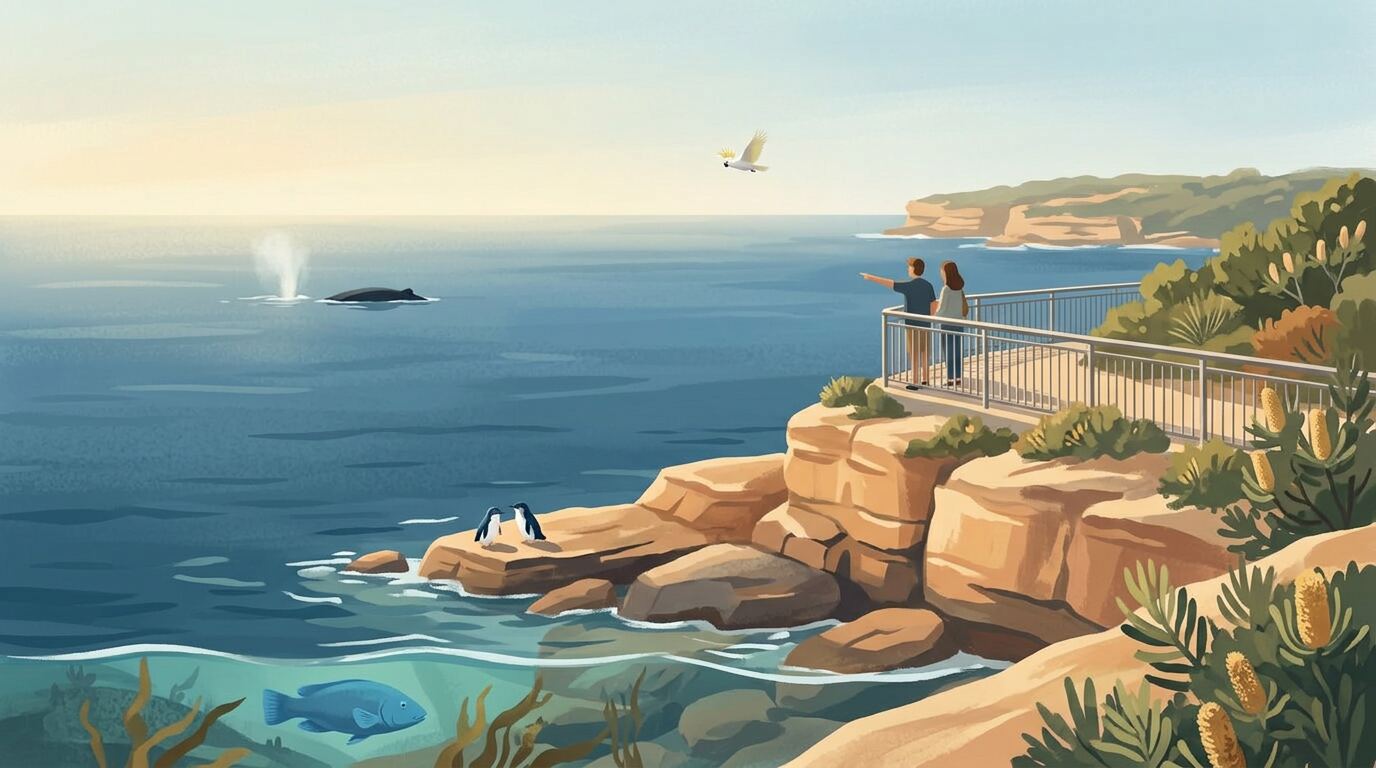
From September to November the whales that went north in June and July come back down the coast towards Antarctica, this time with calves. The southbound run is slower and closer to shore than the northbound one — fewer animals overall, but the closest passes of the year, and a reasonable chance of watching a mother and calf from the cliffs for free.
North Head is the lookout. Go early, before the wind. The whale watching guide has the migration, the operators and the free vantage points in full, and the spring guide covers how the southern run fits into the rest of the season.
Bandicoots after dark
North Head has one more endangered resident, and this one you have a real chance of seeing.
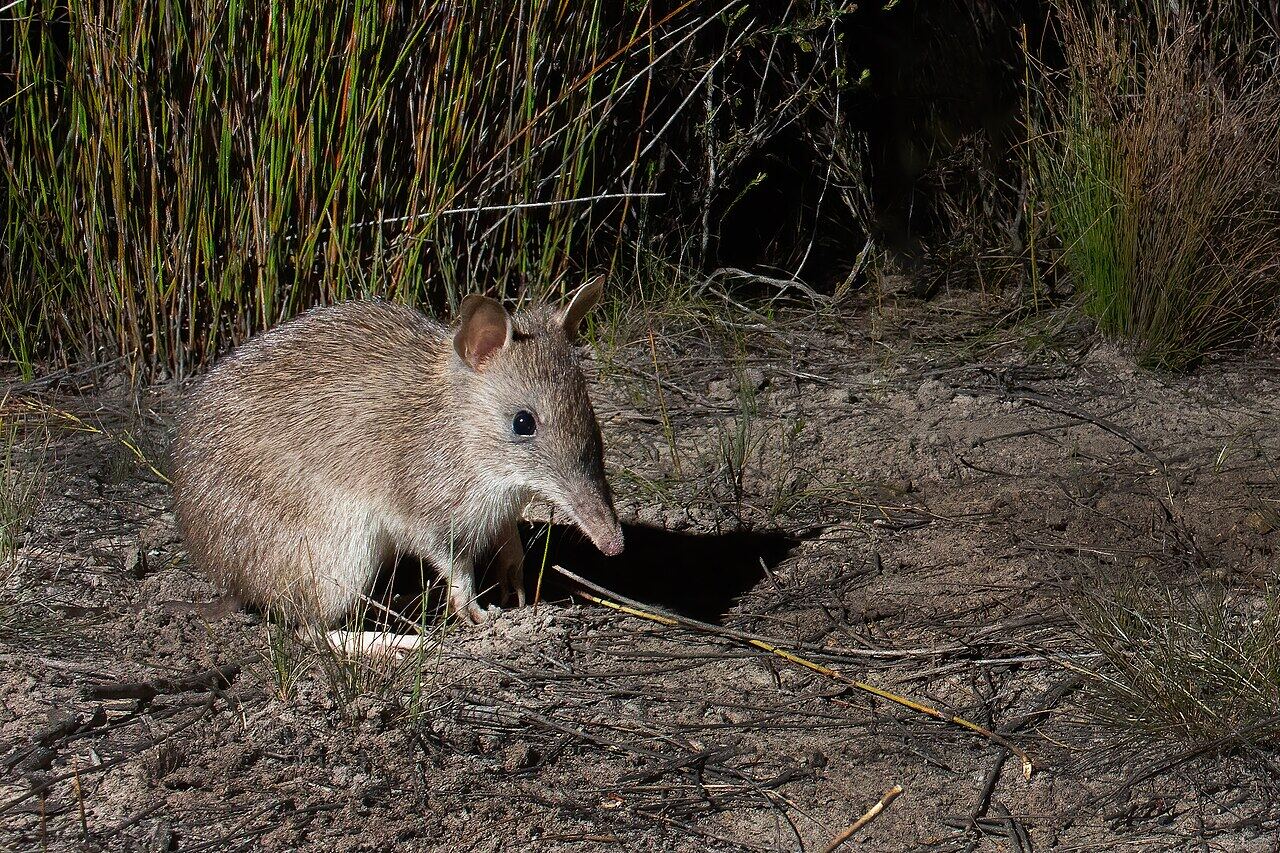
Long-nosed bandicoots are small, pointy-faced marsupials, roughly rabbit-sized, that dig for insects and fungi at night. The North Head population is listed as Endangered — around 150 animals, isolated from every other bandicoot population by the suburbs behind them, and thought to be genetically distinct enough to matter scientifically. It is managed jointly by NSW National Parks, the Sydney Harbour Federation Trust and the Australian Wildlife Conservancy, with year-round fox control as the frontline.
You will know they are around before you see one: they leave small conical holes in soft ground, about the width of a snout, where they have dug for grubs. Those diggings are all over the sanctuary and on lawns nearby.
To actually see one, be on the sanctuary tracks around dusk and move quietly. They are not tame and they will not come to you, but they are active, and the headland is thick with them by Sydney standards.
Bandicoot Heaven, the volunteer-run visitor centre near the Parade Ground, opens Saturdays and Sundays, 10am to 4pm, and is the best place to get oriented before you go looking.
What you'll see, month by month
Some of this is strictly seasonal and some of it is year-round. Roughly:
| What's happening | |
|---|---|
| January–February | Penguin season ending, chicks fledging. Peak water clarity at Cabbage Tree Bay — best snorkelling of the year. Hot, still mornings. |
| March–April | Snorkelling still excellent and the water is at its warmest. Bird activity steady. Quietest visitor months. |
| May–June | Penguins return to the colony to breed. Northbound humpbacks start passing. Water cooling. |
| July–August | Peak northbound whale numbers. Heath begins flowering on North Head. Coldest water of the year. |
| September–October | The big month. Southbound whales with calves, heath in full flower, honeyeaters everywhere, magpies swooping, penguin chicks in burrows. |
| November–December | Whales tailing off. Water warming back up. Brush turkeys nesting. Cabbage Tree Bay coming back into form. |
| Year-round | Blue groper and the Cabbage Tree Bay reserve. Bandicoots at dusk. Cockatoos, lorikeets, kookaburras, gulls, brush turkeys. |
If you are here for one week and want the best odds across the board, late September into October is the answer, and it is not close.
How to watch wildlife here without wrecking it
Manly's wild things survive inside a working suburb, which is a narrow margin. A short list, in rough order of how much it matters:
1. Don't feed anything. Not the gulls, not the cockatoos, not the ducks, not the fish. It is the most common harm and the easiest to avoid. 2. Dogs are banned from the national park entirely — not "on a lead", banned. That covers the whole of North Head, the sanctuary and the penguin coastline, and it is enforced: on-the-spot fines start around $330 and penalties run into the thousands. This is the rule visitors most often get wrong, and the one the penguins can least afford. The dog-friendly guide covers the many places around Manly where dogs are very welcome. 3. Respect the dusk closures. Store Beach after dark is the one genuinely serious line here. 4. No flash photography at any wild animal at night — penguins and bandicoots especially. 5. Take nothing from Cabbage Tree Bay. No shells, no rocks, no fish. It is a no-take reserve and that is why there is anything left in it to look at. 6. Give them room. If an animal changes what it is doing because of you, you are too close. 7. If you find an injured animal, call a wildlife rescue service rather than handling it yourself — bandicoots and seabirds both stress badly in human hands.
The bottom line
Manly's wildlife rewards low expectations and a bit of timing.
You will not see a penguin. You will very likely see a blue groper within twenty minutes of deciding to, and it will be the best thing you do here. You will hear cockatoos and kookaburras whether you want to or not. If you walk North Head early on a spring morning you will get flowering heath, honeyeaters and probably a whale. And if you are on the sanctuary tracks at dusk, quietly, there is a decent chance of a bandicoot.
The penguins are still the most interesting thing on the peninsula, precisely because they are the one part of it that is not on offer. Fifteen breeding pairs, hanging on inside a city of five million, protected mostly by the fact that nobody is allowed to go and look at them.
Start with the snorkelling — the Cabbage Tree Bay guide — and build the rest of the day around what else is free in Manly.
Want it planned around the tides and the ferry? Build my itinerary →