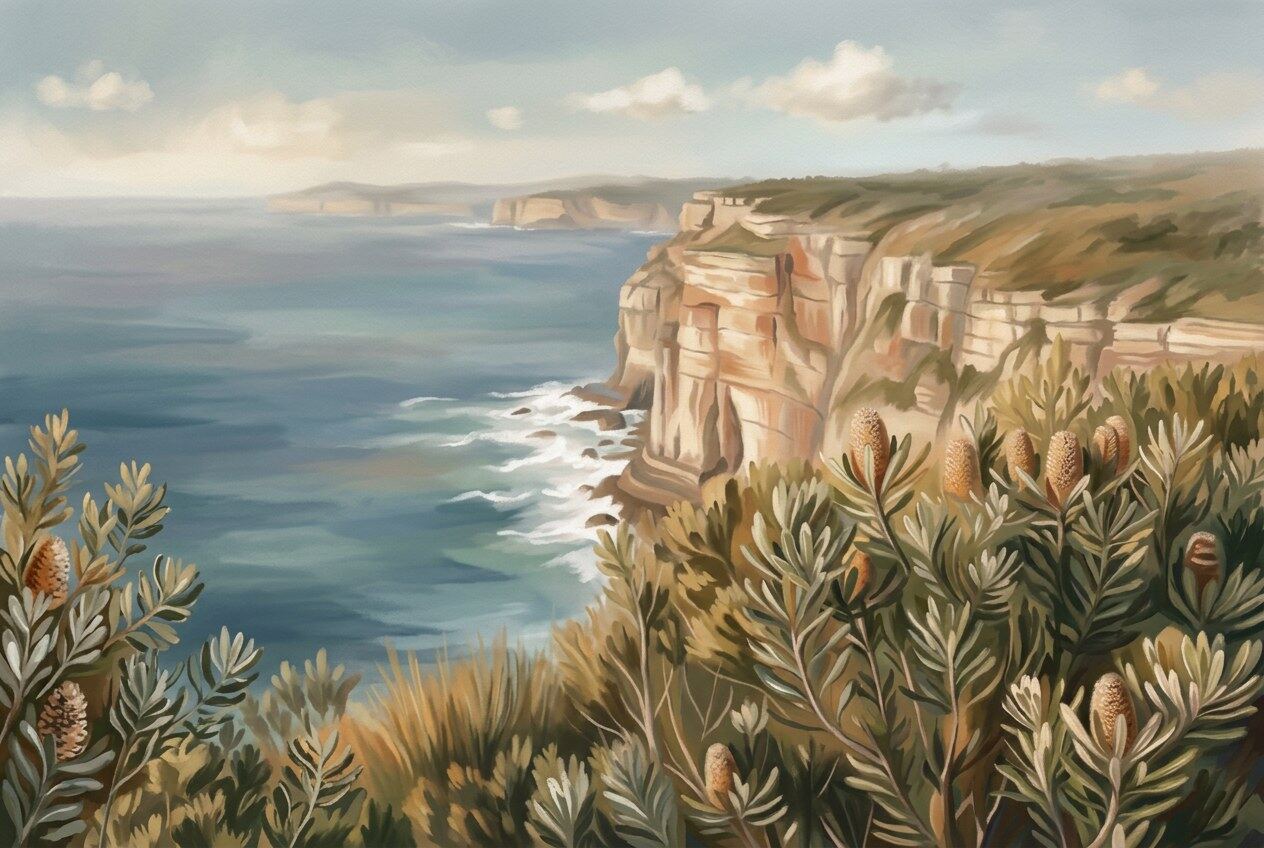
History & Culture
40,000 years of story on a narrow strip of sand.
To understand Manly, you have to start with the Gayamaygal. Then keep going through colonial encounter, quarantine ships, and the day surfing arrived in Australia.
We acknowledge the Gayamaygal people as the traditional custodians of the land and waters around Manly, and pay our respects to Elders past, present and emerging. Sovereignty was never ceded.
Chapter One
Gayamaygal Country
The land Manly sits on belongs to the Gayamaygal people, part of the broader Eora nation. Their connection here spans at least 40,000 years, making it one of the oldest continuous cultures on earth.
The headland was a place of ceremony, fishing and shelter. The marine abundance of Cabbage Tree Bay and the surrounding coves provided a year-round food source. Shell middens and rock engravings still exist across the North Head sanctuary today.
The arrival of the First Fleet in 1788 was catastrophic. Disease and displacement reshaped a population that had thrived here for millennia. The Manly Cove massacre of 1790 is part of the historical record and should be remembered, not glossed over.
The Gayamaygal are not a historical artefact. Their culture is alive and evolving on this land today.
Further reading: AIATSIS, the Australian Institute of Aboriginal and Torres Strait Islander Studies.
"The cove was deep, the fish were many, and the people were of the place. Long before the ships."
Chapter Two
European Settlement & Modern Manly
The name "Manly" comes from Governor Arthur Phillip, who in 1788 described the Aboriginal men he encountered at the cove as "manly". A phrase that very much reflects the colonial gaze of its time.
From the 1850s, entrepreneur Henry Gilbert Smith set out to make Manly the "Brighton of the South Pacific". A Victorian-era seaside resort served by the new ferry route, which began in 1854 and, remarkably, still runs today.
In 1915, Hawaiian Olympic swimmer Duke Kahanamoku stepped onto Manly Beach with a hand-shaped wooden board and gave Australia its first public surfing demonstration. The country has not been the same since.
Up on North Head, the Quarantine Station operated from 1832 to 1984, isolating ships and passengers carrying smallpox, plague and Spanish flu before they reached the colony. The site is now run by the Sydney Harbour Federation Trust. And yes, the ghost tours are real, and they're a hoot.
Today's Manly is the sum of all of this. A surf town, a harbour suburb, a food destination, and home to a diverse community working to honour the deep history of the place.
A timeline
Gayamaygal people live on this land. Fishing, ceremony, and abundance from Cabbage Tree Bay.
Governor Arthur Phillip names the cove 'Manly' after the Aboriginal men he meets here.
The North Head Quarantine Station operates for over 150 years, isolating travellers carrying disease before they reached the colony.
The first ferry crosses Sydney Harbour to Manly. The route still runs today, give or take a boat.
Duke Kahanamoku surfs at Freshwater. Australian surfing officially begins.
A diverse, progressive coastal suburb. Surf, food, tech, and an actively living Aboriginal community.
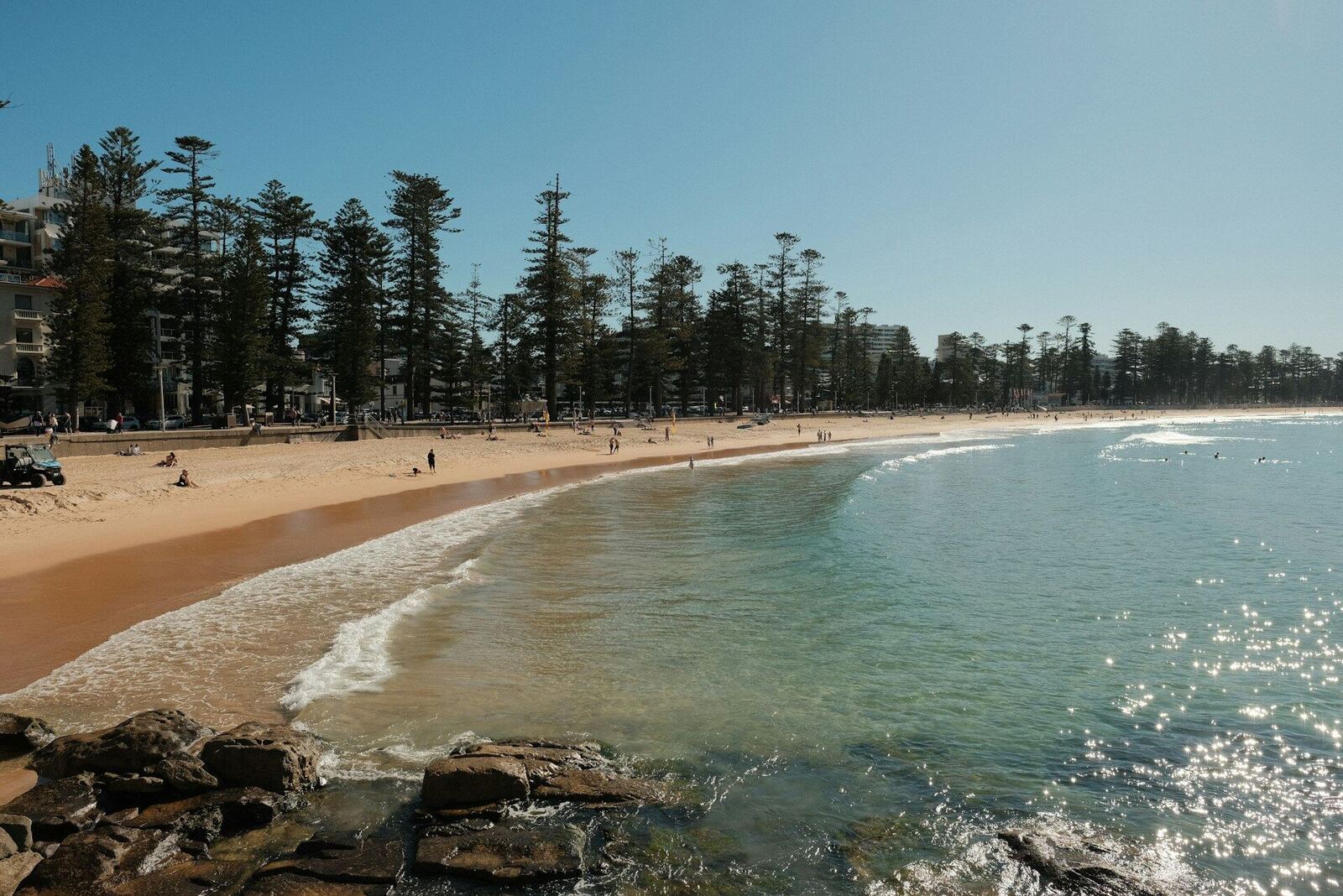
The historic sites, mapped
The gallery, the quarantine station and St Patrick's — walkable in an afternoon.
Build your own
Turn this into a day, in a minute.
Pick what you love, drop the rest. Our planner stitches ferries, beaches, walks and meals into a single, sensible day — and emails it to you.
BUILD MY ITINERARY