Historia y cultura
40.000 años de historia en una estrecha franja de arena.
Para entender Manly, hay que empezar por los Gayamaygal. Luego seguir a través del encuentro colonial, los barcos de cuarentena y el día en que llegó el surf a Australia.
Reconocemos a los Gayamaygal como los custodios tradicionales de la tierra y las aguas alrededor de Manly, y rendimos homenaje a los Ancianos pasados, presentes y emergentes. La soberanía nunca fue cedida.
Capítulo Uno
Territorio de Gayamaygal
La tierra sobre la que se asienta Manly pertenece al pueblo Gayamaygal, parte de la nación Eora más amplia. Su vínculo con este lugar se remonta a al menos 40.000 años, lo que la convierte en una de las culturas continuas más antiguas de la Tierra.
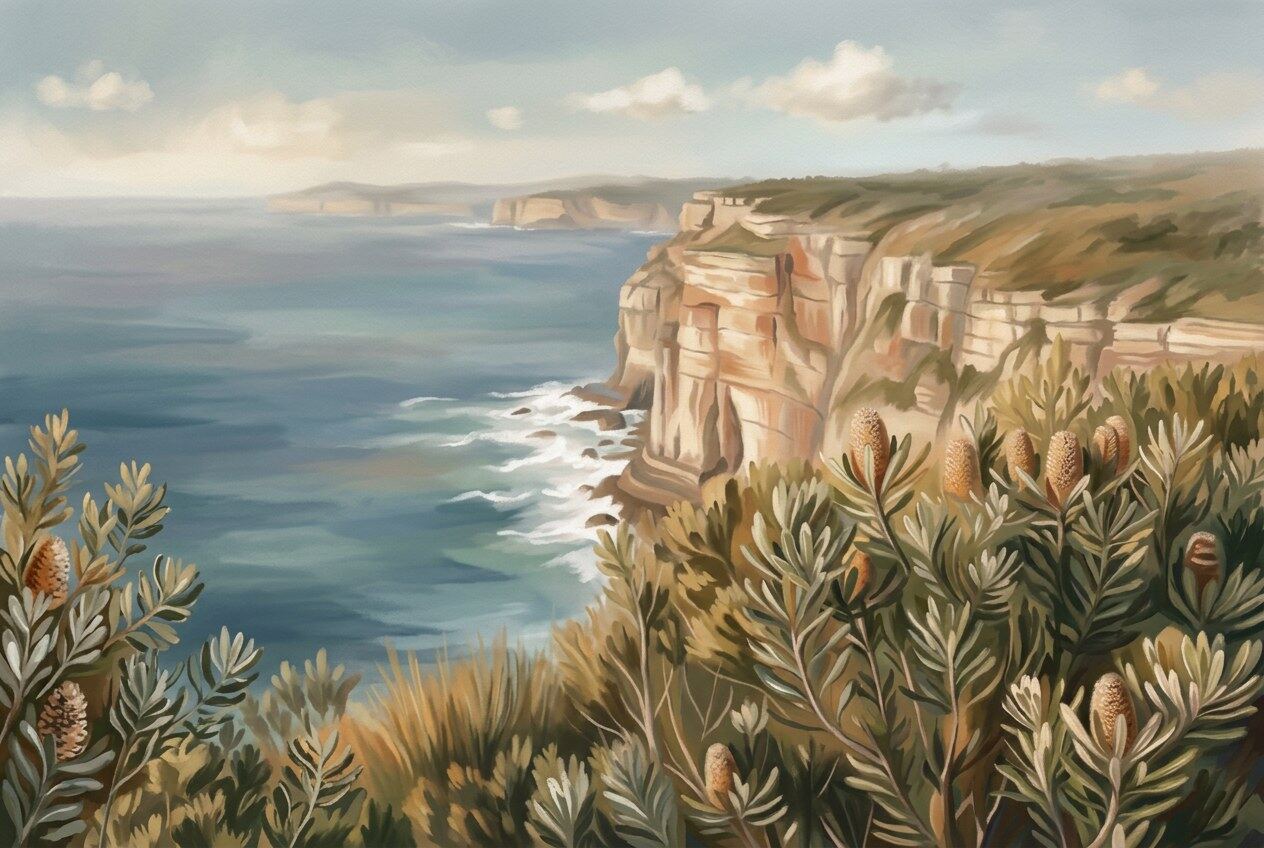
El promontorio era un lugar de ceremonia, pesca y refugio. La abundancia marina de Cabbage Tree Bay y las calas circundantes proporcionaba alimento todo el año. Aún hoy se conservan concheros y grabados rupestres por todo el santuario de North Head.
La llegada de la Primera Flota en 1788 fue catastrófica. La enfermedad y el desplazamiento transformaron a una población que había prosperado aquí durante milenios. En la propia Manly Cove, Bennelong y Colebee fueron secuestrados en 1789, y el gobernador Phillip recibió allí un lanzazo en 1790. Ambos hechos forman parte del registro histórico y deben recordarse, no encubrirse.
Los Gayamaygal no son un vestigio histórico. Su cultura está viva y sigue evolucionando en esta tierra hoy.
Lectura adicional: ¿Por qué Manly se llama Manly?, AIATSIS, el Instituto Australiano de Estudios sobre Aborígenes e Isleños del Estrecho de Torres.
«La cala era profunda, los peces abundantes y la gente era del lugar. Mucho antes de los barcos».
Capítulo dos
Asentamiento europeo y la Manly moderna
El nombre «Manly» viene del gobernador Arthur Phillip, quien en 1788 describió a los hombres aborígenes que encontró en la cala como «manly» (varoniles). Una expresión que refleja muy bien la mirada colonial de su época.
Desde la década de 1850, el empresario Henry Gilbert Smith se propuso convertir Manly en el «Brighton del Pacífico Sur». Un balneario de la era victoriana servido por la nueva línea de ferry, que comenzó en 1854 y, sorprendentemente, sigue funcionando hoy.
En 1915, el nadador olímpico hawaiano Duke Kahanamoku se subió a Manly Beach con una tabla de madera tallada a mano y le dio a Australia su primera exhibición pública de surf. El país no ha vuelto a ser el mismo desde entonces.
En lo alto de North Head, la Estación de Cuarentena funcionó de 1832 a 1984, aislando barcos y pasajeros que portaban viruela, peste y gripe española antes de que llegaran a la colonia. El sitio lo gestiona hoy el Sydney Harbour Federation Trust. Y sí, los tours de fantasmas son reales, y son tremendamente divertidos.
El Manly de hoy es la suma de todo esto. Un pueblo surfero, un suburbio portuario, un destino gastronómico y el hogar de una comunidad diversa que trabaja por honrar la profunda historia del lugar.
Una cronología
El pueblo Gayamaygal vive en esta tierra. Pesca, ceremonia y la abundancia de Cabbage Tree Bay.
El gobernador Arthur Phillip nombra la cala «Manly» por los hombres aborígenes que encuentra aquí.
La Estación de Cuarentena de North Head funciona más de 150 años, aislando a los viajeros con enfermedades antes de que llegaran a la colonia.
El primer ferry cruza el puerto de Sídney hasta Manly. La ruta sigue funcionando hoy, con algún que otro barco distinto.
Duke Kahanamoku surfea en Freshwater. El surf australiano comienza oficialmente.
Un suburbio costero diverso y progresista. Surf, gastronomía, tecnología y una comunidad aborigen aún viva.
Los sitios históricos, en el mapa
La galería, la estación de cuarentena y St Patrick's: caminables en una tarde.
Arma el tuyo
Conviértelo en un día completo, en un minuto.
Elige lo que te gusta, deja el resto. Nuestro planificador une ferris, playas, paseos y comidas en un día con sentido y te lo envía por correo.
CREAR MI ITINERARIO